


The Art of Colonial Silhouettes Capturing Likeness Through Shadows
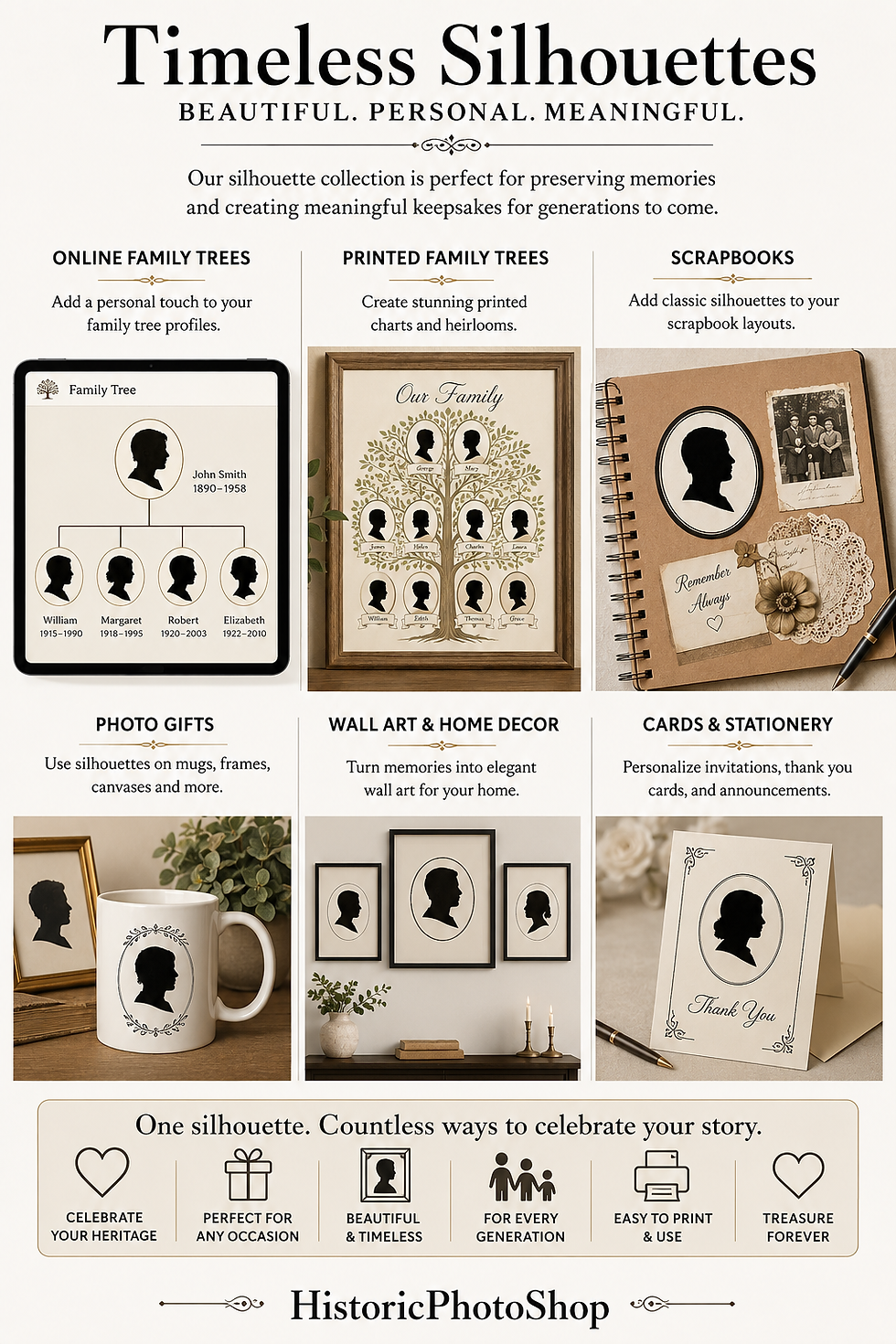
Capturing a person’s likeness has fascinated people for centuries. Before photography, one popular way to preserve an image was through silhouettes. In colonial times, these simple yet elegant profiles became a cherished form of portraiture. They offered a quick, affordable way to capture a person’s features using just shadows and skilled hands. This blog explores how colonial silhouettes were created, their cultural significance, and how you can bring a piece of this history into your home with a unique digital download product.
What Are Colonial Silhouettes?
Colonial silhouettes are profile portraits made by cutting black paper or painting black ink to create a sharp outline of a person’s face and upper body. Unlike detailed paintings or drawings, silhouettes focus on the outline and shape rather than intricate facial features. This style became popular in the 18th century, especially in America and Europe, as a way to capture a likeness quickly and affordably.
Silhouettes were often used for family keepsakes, gifts, or even as a form of identification. They provided a striking contrast between the dark profile and the light background, making the subject instantly recognizable by their unique shape.
How Colonial Silhouettes Were Made
Creating a silhouette required skill and precision. Here’s a step-by-step look at how colonial artists captured these shadowy portraits:

1. Positioning the Subject
The sitter would be positioned sideways, usually in profile, so the artist could clearly see the outline of their face, nose, lips, chin, and sometimes the shoulders. The profile view was essential because it offered the most distinctive shape of a person’s features.
2. Casting a Shadow
A common technique involved using a candle or lamp to cast the sitter’s shadow onto a white surface such as paper or a wall. The artist would then trace the shadow’s outline with a pencil or charcoal. This method ensured an accurate and natural profile shape.
3. Cutting or Painting the Silhouette
After tracing, the artist would either:
Cut the profile out of black paper with scissors, creating a sharp, clean edge.
Paint the profile directly onto paper or ivory using black ink or paint.
Cut paper silhouettes were especially popular because they could be mounted on contrasting backgrounds and framed easily.
4. Adding Details
While silhouettes were mostly about the outline, some artists added subtle details like hairstyles, collars, or hats to give more personality to the portrait. These small touches helped identify the sitter and added charm to the artwork.
5. Framing and Display
Once complete, silhouettes were often framed in small oval or rectangular frames. They were displayed in homes as treasured mementos or given as gifts to loved ones.
Why Silhouettes Were Popular in Colonial Times
Several factors made silhouettes a favored art form during the colonial period:
Affordability: Unlike painted portraits that required expensive materials and long sittings, silhouettes were quick and inexpensive.
Speed: Artists could create a silhouette in minutes, making it accessible to more people.
Simplicity: The bold contrast and minimal detail made silhouettes visually striking and easy to recognize.
Portability: Silhouettes were small and lightweight, easy to send or carry.
Cultural Appeal: The style fit well with colonial aesthetics that valued modesty and practicality.
Examples of Colonial Silhouettes
Many colonial families treasured silhouette portraits as family heirlooms. For example, a silhouette of a young woman might show her distinctive bonnet and hairstyle, while a man’s profile could highlight a prominent nose or chin. These portraits captured not just physical features but also a sense of personality and status.
One famous example is the silhouette portraits of George Washington, which helped popularize the art form in America. These portraits were widely copied and admired for their simplicity and elegance.
Bringing Colonial Silhouettes into Your Home Today
If you appreciate the charm and history of colonial silhouettes, you can now own a digital download featuring authentic colonial American family people. This product offers high-quality images inspired by original silhouettes, perfect for decorating your home, creating personalized gifts, or using in craft projects.
Why Choose This Digital Download?
Historical Accuracy: The images are based on real colonial silhouettes, preserving the style and detail.
Versatility: Use them for wall art, scrapbooking, invitations, or educational materials.
Instant Access: Download immediately and print at your convenience.
Unique Decor: Add a touch of colonial history and elegance to your space.
Explore the collection here: Colonial American Family People Digital Download
Tips for Displaying Silhouettes in Your Home
To highlight the beauty of silhouette art, consider these display ideas:
Frame the prints in simple black or wooden frames to echo colonial styles.
Use oval frames to mimic traditional portrait shapes.
Group several silhouettes together to create a family gallery wall.
Place them in entryways or living rooms where guests can admire the historical charm.
The Lasting Appeal of Silhouettes
Silhouettes remain popular because they capture the essence of a person with minimal detail. Their timeless style connects us to the past and reminds us of the creativity people used to preserve memories. Whether you are a history enthusiast, art lover, or someone looking for unique decor, colonial silhouettes offer a fascinating glimpse into early American life.
By exploring this art form and incorporating it into your home, you keep alive a tradition that blends shadow, craft, and personal history.

Comments